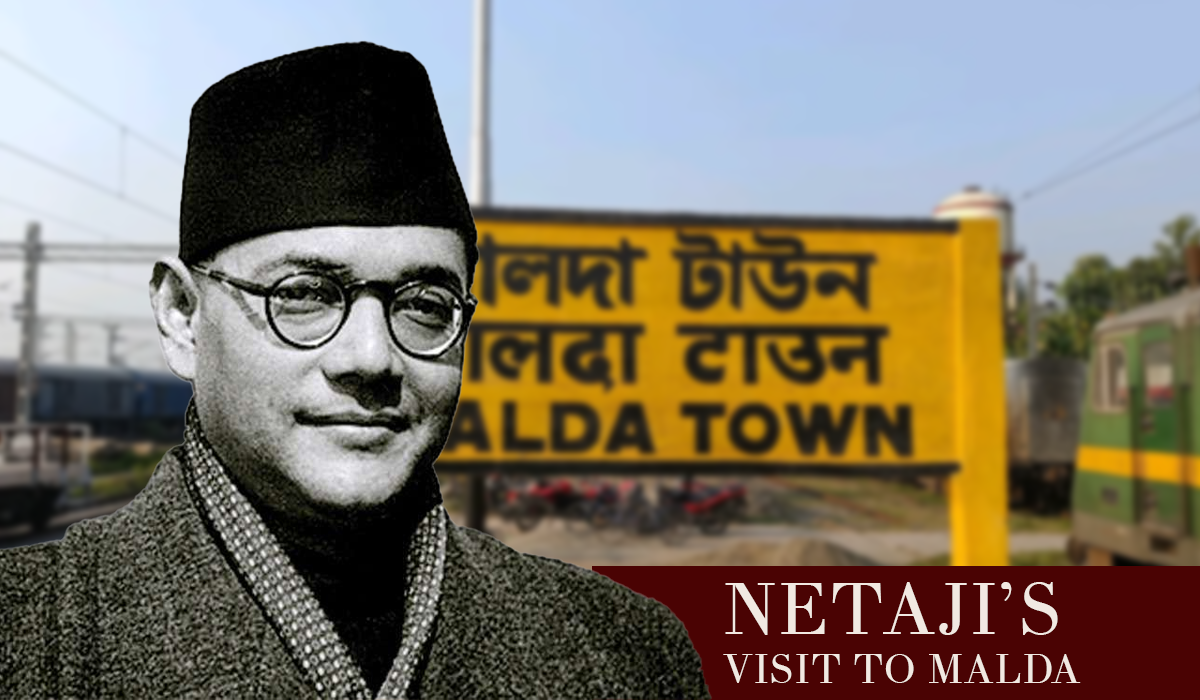
Uncovering Netaji’s Secret 1939 Visit, While the history books often focus on the grand rallies in Kolkata or the battlefields of Kohima, some of the most potent sparks of the Indian independence movement were lit in the rural heartlands of Bengal. For the residents of Malda, one such spark remains a golden chapter of local lore—the day Netaji Subhas Chandra Bose arrived to set the district on fire with the spirit of rebellion.
The date was January 31, 1939. To the British authorities, it was just another day of monitoring a "troublemaker." To the people of Malda, it was the day a legend walked among them.
To appreciate why Netaji’s presence in Malda was so significant, we must look at the national climate. By early 1939, Netaji was at a crossroads. He had recently stepped down from his position as the Congress President after the famous Tripuri session, refusing to compromise his radical vision for a "slow and steady" approach.
He was a man in a hurry. He knew World War II was looming, and he saw it as the perfect opportunity to strike the British Empire while it was distracted. This mission led him on a whirlwind tour of North Bengal to establish the Forward Bloc. Malda, with its strategic location and history of agrarian resistance, was a top priority.
The venue was the village of Nagharia, located in the English Bazar block. On the banks of the Kalindri River, a massive "Kishak Sammelan" (Peasant Conference) had been organized. History suggests that the British police were on high alert, but they could do little to stop the tide of humanity.
Thousands of people arrived from the remotest corners of the district. Farmers from Gazole, weavers from Kaliachak, and students from Chanchal descended upon the grounds of Nagharia High School. They didn't come for a political speech; they came to see the "Desh-nayak"—the hero who promised them that they wouldn't have to live as subjects forever.
Netaji did not work in a vacuum. His visit was facilitated by local giants like Atul Chandra Kumar, a man whose name is synonymous with Malda’s resistance. Kumar and other local organizers managed the logistics under the watchful eyes of British spies.
When Netaji finally stood on the makeshift wooden dais, the roar of "Inquilab Zindabad" echoed across the Kalindri. He spoke in plain, powerful Bengali, addressing the specific pains of the Malda peasantry. He spoke against the oppressive taxes and the British-backed land systems. He was telling the people of Malda that their local struggle for land was part of a global struggle for dignity.
Why does this visit matter nearly a century later? Because it changed the DNA of the district. Before 1939, Malda was seen as a quiet, agrarian pocket. After Netaji’s visit, it became a hotbed of revolutionary activity. This energy eventually spilled over into the Quit India Movement of 1942, where Malda saw some of the most intense anti-British protests in North Bengal.
Even today, as you walk past the Netaji Subhash Chandra Bose Indoor Stadium or the statue at the heart of Malda town, you aren't just looking at a name. You are looking at a legacy that was cemented on that dusty afternoon in Nagharia.
As we celebrate Netaji’s birth anniversary—now rightfully called Parakram Diwas—it is vital to remember these "micro-histories." Netaji wasn't just a figure on a pedestal; he was a leader who sat on the banks of our rivers and walked through our villages.
His life was a testament to the fact that freedom is never a gift—it is a prize won through courage. To the people of Malda, he remains more than a historical figure; he is a permanent part of the local identity.