Raiganj Tourism Guide: Wildlife, Heritage & Culture:
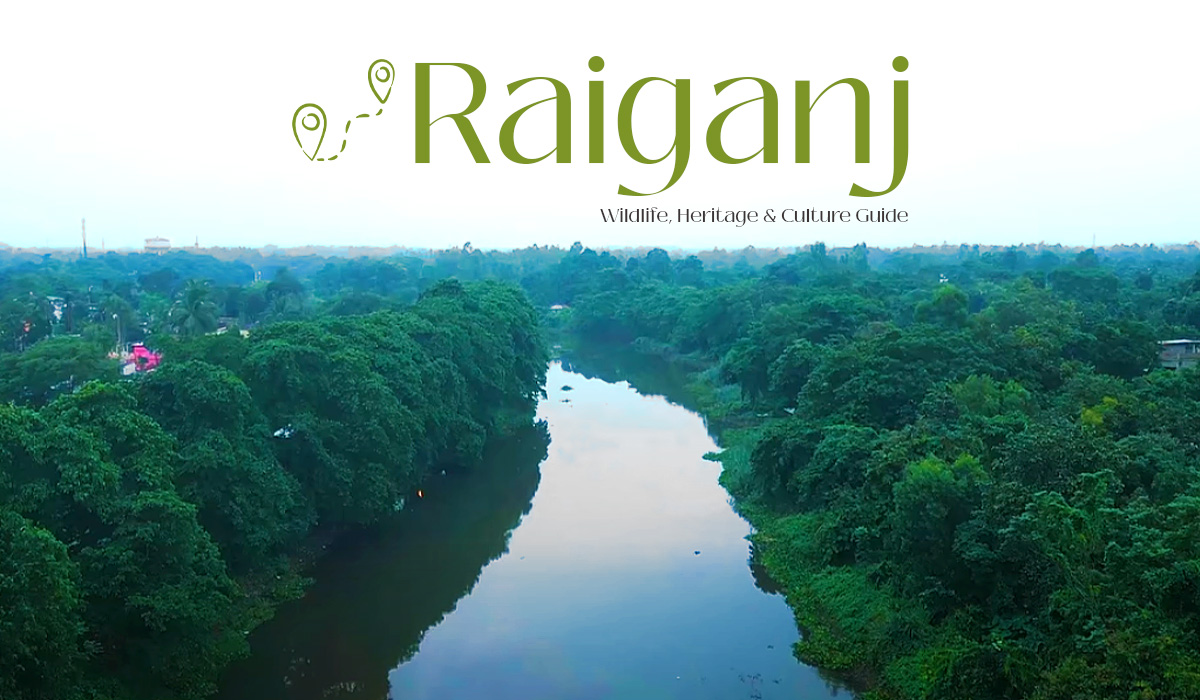
Raiganj, the administrative headquarters of Uttar Dinajpur district in northern West Bengal, lies on the banks of the Kulik River. This vibrant town connects the northern and southern parts of the state, a geographical layout shaped by the 1947 partition of Bengal. Officially established as a municipality in 1951, Raiganj has grown into one of the most active trade and transport hubs in North Bengal. With National Highways NH-34 and NH-31 passing through its center, the town enjoys excellent road connectivity to Siliguri, Malda, and Kolkata.
The heart of Raiganj is marked by the iconic Ghori More Clock Tower, a heritage landmark and a favorite meeting point surrounded by busy markets and old buildings that showcase the town’s mix of history and daily life.
The region around Raiganj is known for its fertile plains rich in rice and jute cultivation. Historically, it was part of the ancient Pundra kingdom during the Mauryan Empire and later came under the Buddhist Pala and Hindu Sena rulers. In 1204 CE, Bakhtiyar Khilji’s invasion brought the area under the Delhi Sultanate, followed by Mughal and British control. During the British period, Dinajpur district became a center for anti-colonial movements, particularly during the 1905 partition protests. After the 1947 division of Bengal, Raiganj remained in Indian territory and in 1992, Uttar Dinajpur was formed by dividing West Dinajpur, with Raiganj chosen as the new district headquarters for its central location and commercial prominence.
For nature lovers, the most famous attraction of Raiganj is the Kulik Bird Sanctuary, officially known as the Raiganj Wildlife Sanctuary. Covering an area of about 1.3 square kilometers, it is the second-largest bird sanctuary in Asia and a paradise for birdwatchers. Every winter, around 90,000 to 100,000 migratory birds, including painted storks, open-billed storks, spoonbills, and pelicans, arrive here from distant regions. Early mornings and late afternoons are the best times to visit the sanctuary when the birds are most active. The site also features forested walking trails and watchtowers for a panoramic view of the wetlands and its avian residents.
Raiganj’s cultural landscape is equally rich, blending ancient temples and colonial-era architecture. About 12 kilometers from town lies the Tarasundari Temple at Bamair, built around 1760 by the Maharajas of Dinajpur. This terracotta-decorated temple with a unique dome-shaped chala design is now a state-protected heritage site under the West Bengal Heritage Commission. Another historic religious site is the Bhairabi Temple at Bindole, about 20 kilometers from Raiganj, which attracts devotees year-round. The Bahin Zamindar Bari, a colonial mansion built by Zamindar Ishwar Chandra Chowdhury in the late 19th century, stands on the banks of the Nagar River and remains one of the finest examples of pre-independence architecture, now recognized as a heritage site.

Cultural life in Raiganj is a reflection of North Bengal’s diverse traditions. The Uttar Dinajpur Festival, held annually at the Sudarsanpur High School ground, celebrates local crafts, music, and folk art forms such as the Gomira dance and Khon theatre, both of which hold Geographical Indication status. During major festivals like Durga Puja, the town becomes vibrant with beautifully decorated pandals, traditional dances, and community gatherings. Kali Puja, Saraswati Puja, and Eid are also observed with equal enthusiasm, symbolizing the town’s communal harmony. The people of Raiganj primarily speak Bengali, while some rural areas also use Rajbanshi and Santali languages.
Food in Raiganj carries the authentic taste of Bengal. The local cuisine revolves around rice, lentils, vegetables, and freshwater fish such as ilish, rohu, and katla, often prepared with mustard paste and green chilies. Traditional dishes like shukto, bhaja, and dal are common in daily meals, while street foods like phuchka, jhal muri, and ghugni are popular among locals. Raiganj’s sweet shops are famous for Bengali desserts such as rosogolla, laddoo, and barfi, while homemade delicacies like pithe and paayesh are favorites during winter festivals.
Reaching Raiganj is convenient by both road and rail. The Raiganj Railway Station (RGJ) lies on the Barsoi–Radhikapur branch line, connected to Kolkata through the Kulik Express and Radhikapur Express. The town also enjoys road connectivity through NH-34, linking it to major cities such as Siliguri, Malda, and Kolkata. Long-distance buses operate daily, and the nearest airport, Bagdogra (IXB), is approximately 167 kilometers away. Local transport mainly consists of cycle-rickshaws, auto-rickshaws, and shared jeeps, offering affordable commuting options.
Economically, Raiganj acts as a vital agricultural and trade center for North Bengal. It has long been known for rice milling and jute processing, with traders from nearby regions flocking to its markets. The government has undertaken several development initiatives in recent years, including a ₹7.5 crore road repair project across all municipal wards in 2024 and a ₹18.85 crore campus development plan for Raiganj University in 2025, reflecting the region’s growing infrastructure and education focus.
Travelers planning to explore Raiganj should ideally visit between October and February, when the weather is cool and dry, perfect for sightseeing and birdwatching. The monsoon season, from June to September, often brings heavy rain and occasional flooding, so it is best avoided. Visitors are advised to drink bottled water, carry mosquito repellent, and book hotels in advance, as accommodations are limited during the festive and migratory bird seasons. Hotels near Raiganj railway station or close to the Kulik Bird Sanctuary offer convenient stays.
Raiganj may not feature on the typical tourist circuit, but that is what makes it special. Its blend of natural beauty, historical depth, and warm local culture creates a genuinely immersive experience for travelers. Whether you’re watching migratory storks at sunrise, walking through the bustling bazaar near Ghori More, or enjoying a plate of steaming fish curry and rice, Raiganj captures the essence of small-town Bengal. A stroll by the Kulik River at dusk perfectly sums up this hidden gem of North Bengal—peaceful, authentic, and unforgettable.